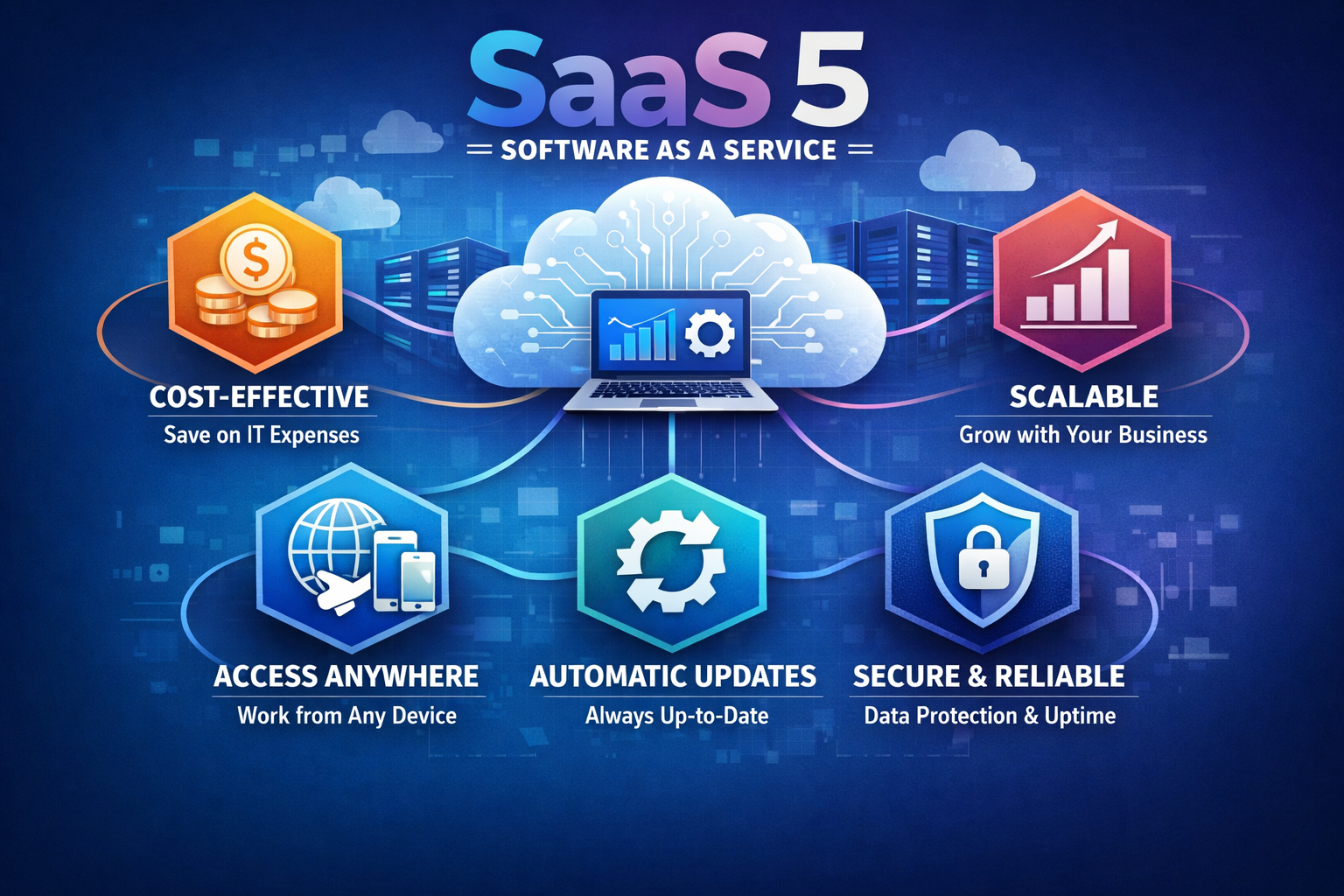
Software as a Service, or SaaS, is one of the most influential software delivery models in modern computing. Instead of installing and maintaining software on individual machines or private infrastructure, users access applications over the internet through a subscription or usage-based model. This approach shifts software from a product that is purchased once to a service that is continuously delivered, updated, and supported. For businesses, SaaS reduces the friction of deployment and maintenance. For users, it offers accessibility, convenience, and predictable costs.
At its core, SaaS changes how software is built, distributed, and consumed. Traditional software often required lengthy installation processes, operating system compatibility checks, hardware planning, and manual upgrades. SaaS removes much of that complexity by centralizing the application within the provider’s infrastructure. Updates are deployed by the vendor, security patches are applied centrally, and customers typically access the system through a browser or lightweight client. This model significantly reduces the burden on internal IT teams and allows organizations to adopt tools more quickly.
One of the strongest advantages of SaaS is scalability. Companies can start with a small number of users or limited feature sets and expand as their needs grow. This elasticity is especially valuable for startups, remote teams, and enterprises managing shifting workloads. SaaS also aligns well with operational expenditure models, where businesses pay recurring fees instead of making large upfront capital investments. This cost structure improves budgeting flexibility and lowers the barrier to entry for advanced software that may otherwise be too expensive to deploy traditionally.
From an engineering perspective, SaaS introduces both efficiencies and architectural challenges. Multi-tenancy is a defining characteristic in many SaaS platforms, where a single application instance serves multiple customers while keeping their data isolated. Designing for availability, performance, tenant isolation, and security becomes critical. Teams must build robust authentication systems, rate limiting, observability, disaster recovery strategies, and reliable deployment pipelines. Since users expect continuous availability, SaaS platforms often rely on cloud-native patterns such as container orchestration, horizontal scaling, managed databases, and infrastructure automation.
Security and compliance are central concerns in any serious SaaS offering. Because customer data is stored and processed by the provider, trust is built through strong encryption, access control, audit logging, incident response planning, and compliance with standards such as SOC 2, ISO 27001, GDPR, or HIPAA where applicable. A mature SaaS business cannot treat security as a secondary feature. It must be integrated into development workflows, infrastructure design, vendor selection, and customer support processes. The most successful SaaS companies make security part of the product experience rather than a hidden backend concern.
SaaS also changes product strategy. Because the provider maintains an ongoing relationship with the customer, success depends less on a one-time sale and more on retention, adoption, and measurable value delivery. Product teams monitor usage patterns, onboarding friction, churn signals, and feature engagement to improve the user experience continuously. This creates a tight feedback loop between engineering, design, support, sales, and customer success. In strong SaaS organizations, roadmap decisions are informed by both technical feasibility and customer behavior, resulting in faster iteration and more relevant features.
The business model behind SaaS has made it attractive across nearly every industry. Teams use SaaS products for communication, project management, accounting, human resources, customer relationship management, analytics, development workflows, and cybersecurity. The recurring revenue model creates financial predictability for vendors, while customers benefit from continuous improvement and support. However, competition in SaaS is intense, and switching costs can be low unless the product delivers consistent value. A successful SaaS company must therefore combine technical excellence, operational reliability, thoughtful pricing, and a product experience that solves real problems better than alternatives.
As software continues to move toward cloud-first and service-driven delivery, SaaS remains a dominant model for both startups and established enterprises. Its appeal lies in speed, accessibility, and the ability to evolve continuously without forcing customers through disruptive upgrade cycles. Yet building a strong SaaS product requires more than hosting an application online. It demands disciplined architecture, security maturity, scalable operations, clear product thinking, and an ongoing commitment to customer outcomes. When executed well, SaaS is not just a deployment model. It is a complete approach to delivering software as an enduring service.